By Analyst Team · Updated 2026-07-11 · 12 min read
You’ve probably heard the term "IPTV" thrown around in tech forums, Reddit threads, or by friends who cut their cable cord years ago. But what is IPTV TV exactly, and why are millions of people switching to it in 2026? In short, IPTV stands for Internet Protocol Television — it delivers live TV channels and on-demand video content over your internet connection instead of through traditional satellite dishes, cable boxes, or antenna signals. This complete guide will walk you through everything: how IPTV works, how it compares to cable, the best IPTV service for Firestick users, legal considerations, and step-by-step setup instructions. By the end, you’ll know exactly whether IPTV is the right TV solution for your household.
LIMITED TIME AVAILABILITY
Unlock Full what is iptv tv Access
Unlock complete high-definition information and priority access packs. Lock in your pricing model today before plans return to standard regional metrics.
What Is IPTV TV? A Clear Definition
IPTV, or Internet Protocol Television, is a system where television services are delivered using the internet protocol suite over a packet-switched network like the internet, instead of being delivered through traditional terrestrial, satellite, or cable television formats. Essentially, your TV channels and videos are sent as data packets over your broadband connection — the same way you stream Netflix or YouTube — and are reassembled into video on your screen by a specialized app or set-top box.
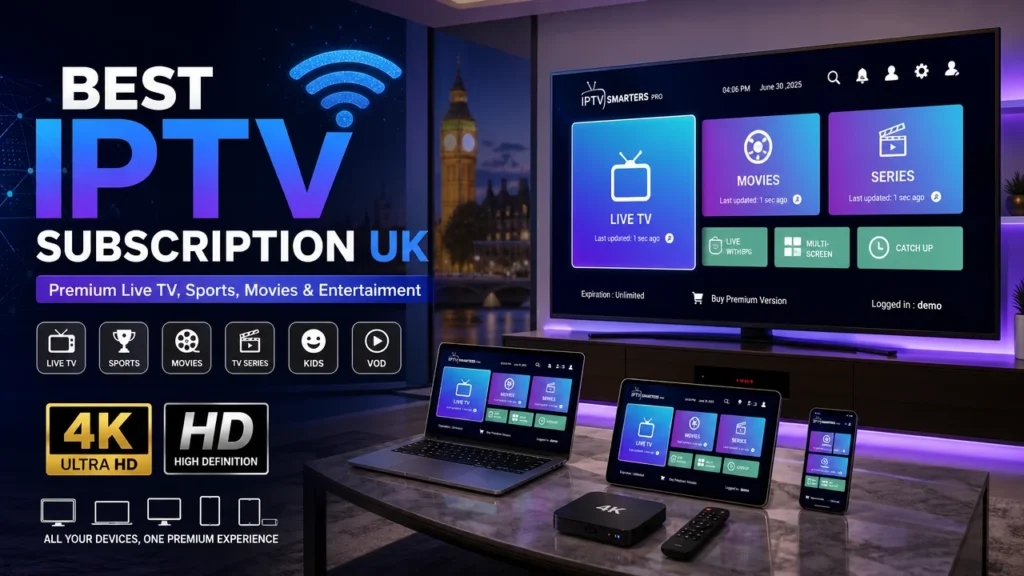
Unlike standard web streaming where you watch clips on demand, IPTV typically includes live television channels, time-shifted media (catch-up TV), and video-on-demand (VOD) libraries. Many users confuse IPTV with simple streaming services like Hulu Live or Sling TV — but while those use IP technology, the term "IPTV" in consumer conversations often refers to third-party subscription services that aggregate thousands of channels from around the world. The image above shows a typical IPTV interface where users can browse live sports, 24/7 news, and premium movie channels all from one dashboard.
How Does IPTV Work? Step by Step
If you’ve ever asked "how does IPTV work" without getting a straight answer, here’s the breakdown in simple terms. IPTV operates through three key components: the content source, the delivery network, and your playback device.
Step 1: Content Acquisition and Encoding
Television channels and video files are captured from their original sources — satellite feeds, cable headends, or digital files — and are encoded into digital video formats (typically H.264 or H.265). This encoding compresses the video so it can travel efficiently over the internet without losing significant quality.
Step 2: Streaming Server and Middleware
The encoded content is stored on powerful streaming servers. Middleware software organizes channel lists, electronic program guides (EPG), user authentication, and billing. When you subscribe to an IPTV provider, you receive a unique username, password, and usually a playlist URL (M3U link) or portal URL. This is your key to unlocking their server.
Step 3: Delivery via CDN and ISP Networks
When you select a channel, a request is sent from your device to the IPTV server. The server streams the video in small UDP or HLS (HTTP Live Streaming) packets directly to your device over your internet connection. Many providers use Content Delivery Networks (CDNs) to reduce buffering by serving you from the nearest server location.
Step 4: Decoding and Playback on Your Device
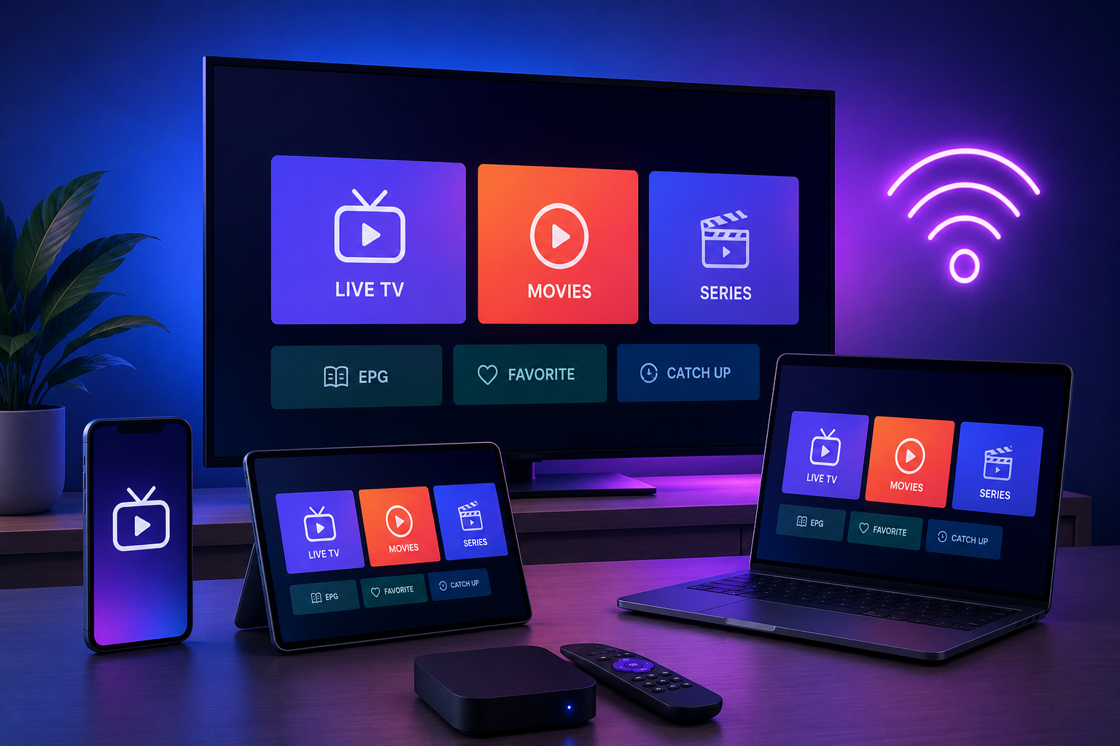
Your playback device — whether it’s a Firestick, Android TV box, Smart TV, smartphone, or PC — receives these data packets and decodes them back into video and audio using an IPTV player app like TiviMate, IPTV Smarters, or VLC. The app then displays the live television stream on your screen. The entire process happens in just a few seconds, giving you near-instant channel switching.
Concrete Benefits of IPTV for Everyday Users
Why are over 200 million households globally now using IPTV services? The advantages go beyond just cutting the cable cord. Here’s what real users consistently report:
- Massive channel selection: An IPTV channels list USA alone often includes 5,000 to 20,000 channels covering every local market, premium sports networks like ESPN and NFL Sunday Ticket, international channels, and 24/7 movie channels — all for a fraction of cable’s cost.
- Cost savings of 60-80%: While a standard cable package costs $100-$200 per month, a quality IPTV subscription typically ranges from $10 to $30 per month. Some providers offer yearly plans that drop the cost even lower.
- Multi-device flexibility: You can watch on your Smart TV, Firestick, smartphone, tablet, laptop, and even gaming consoles — often simultaneously on multiple devices depending on your plan.
- No long-term contracts: Most IPTV services operate on monthly subscriptions with no annual commitments. If you’re not satisfied, you can cancel anytime without early termination fees.
- Catch-up and VOD features: Many providers include 7-14 days of catch-up TV so you never miss a show, plus massive libraries of on-demand movies and series updated regularly.
- High-definition and 4K streaming: Premium IPTV packages offer FHD (1080p) and 4K streams for supported channels, often with better picture quality than compressed cable broadcasts.
Secure special promotional rates instantly before the window closes.
Activate Your what is iptv tv Subscription Now →Honest Limitations You Should Know
No technology is perfect, and IPTV comes with its own drawbacks. Being transparent about these will help you make an informed decision:
- Dependence on internet quality: IPTV requires a stable, fast internet connection. For HD streaming, you’ll need at least 15 Mbps; for 4K, 50 Mbps or more. If your ISP throttles or has outages, your TV goes dark.
- Buffering during peak hours: Even with good speeds, buffering can occur during prime-time hours if your provider’s servers are overloaded or if your local ISP network is congested.
- Legal and licensing gray areas: Many IPTV services operate in a legal gray zone. While IPTV technology itself is legal, watching copyrighted content without proper licensing may be illegal in your region. Always research legal IPTV providers before committing.
- Reliability of third-party services: Some providers disappear overnight, leaving you without service and losing your prepaid subscription. Always check IPTV review Reddit threads and independent sources for provider reputation.
- Setup complexity for non-technical users: Unlike plug-and-play cable, IPTV often requires installing third-party apps, entering portal URLs, and configuring settings — though many providers now offer simplified setup guides.
- Limited customer support: Most IPTV providers don’t offer 24/7 phone support. Support is typically via email, WhatsApp, or Telegram tickets, and response times vary.
IPTV vs Cable TV: The Honest Comparison
Still wondering about IPTV vs cable TV? Here’s a direct comparison table that breaks down the key differences across the factors that matter most to consumers.
| Feature | IPTV TV | Traditional Cable TV |
|---|---|---|
| Monthly Cost | $10 – $30 | $100 – $200+ |
| Total Channels | 5,000 – 25,000+ | 200 – 500 |
| Video Quality | HD to 4K (variable) | HD (often compressed) |
| Device Flexibility | Smart TV, Firestick, phone, PC, tablet | Cable box only (limited apps) |
| Contract Required | No (monthly plans) | Yes (1-2 years often) |
| DVR / Catch-up TV | Yes (7-14 days typical) | Yes (limited storage) |
| International Channels | Massive selection (all countries) | Expensive add-ons |
| Reliability | Depends on internet & provider | Very reliable (dedicated infrastructure) |
Who Is IPTV For? Real User Profiles
IPTV isn’t for everyone, but it’s an excellent fit for specific types of viewers. Here’s who benefits most:
- Cord-cutters and budget-conscious households: If you’re tired of paying $150+ for cable and want 90% savings while keeping all your favorite channels, IPTV is your solution.
- Sports enthusiasts: Fans who want access to multiple sports packages (NFL, NBA, MLB, NHL, UFC, Premier League, La Liga, etc.) without paying extra for each one find IPTV especially valuable. The best IPTV service for Firestick users almost always bundles all sports channels.
- International viewers and expats: If you want live TV from your home country — Indian, Arabic, Filipino, Turkish, Latin American, or European channels — IPTV provides comprehensive packages that traditional cable rarely offers.
- Tech-savvy users comfortable with setup: People who don’t mind installing an app, entering a URL, and occasionally troubleshooting buffering issues will get the most out of IPTV.
- Streaming device owners: If you already own a Firestick, Android TV box, or Smart TV, IPTV is a natural addition to your entertainment setup.
Pros
- Massive savings (60-80% cheaper)
- Thousands of global channels
- Watch on any device anywhere
- No long-term contracts
- Catch-up TV and VOD included
- HD and 4K streaming available
Cons
- Requires stable high-speed internet
- Buffering possible during peak times
- Legal gray zone for some providers
- Provider reliability varies widely
- Setup can frustrate beginners
- Limited customer support options
How to Get Started: 7 Practical Steps
Ready to try IPTV? Follow this step-by-step guide to set up your service the right way — whether you’re using a Firestick, Smart TV, or Android device.
- Check your internet speed: Run a speed test. You need at least 15 Mbps for SD/HD and 50 Mbps for 4K. Wired Ethernet connections are more stable than Wi-Fi for streaming.
- Choose a reputable provider: Research where to buy IPTV subscription safely. Look for providers with at least 6-12 months of positive IPTV review Reddit feedback, trial options, and responsive support via Telegram or WhatsApp.
- Select your device: The best IPTV service for Firestick users typically supports TiviMate or IPTV Smarters. For Smart TVs, check if your TV runs Tizen (Samsung) or webOS (LG) and find a compatible app. Android TV boxes offer the most flexibility.
- Install an IPTV player app: On Firestick, go to the Amazon App Store and search for TiviMate, IPTV Smarters Pro, or OTT Navigator. You may need to enable "Apps from Unknown Sources" in developer options for some apps.
- Enter your subscription details: Upon opening the app, you’ll be prompted to enter a portal URL, M3U playlist link, or Xtream Codes API details — all provided by your IPTV provider after payment.
- Configure your channel list and EPG: Once the channels load, customize your favorites list. Load the Electronic Program Guide (EPG) URL to see TV schedules. Most providers include the EPG link in their welcome email.
- Test and troubleshoot: Try several channels, especially local and sports. If you encounter buffering, try lowering the streaming quality in settings, switching to a wired connection, or using a VPN (which some ISPs don’t throttle).
For those wondering how to set up IPTV on Smart TV specifically, the process is nearly identical: install a compatible app from your TV’s app store, enter your provider’s details, and you’re live. Samsung and LG Smart TVs have several IPTV apps available directly.
Frequently Asked Questions
Is IPTV legal in the USA and Europe?
IPTV technology itself is perfectly legal. The legality depends on whether the provider has proper licensing for the content they stream. Legal IPTV providers like Hulu Live, YouTube TV, and Sling TV operate with full rights. However, many third-party IPTV services stream copyrighted channels without permission, which is illegal in most jurisdictions. Always verify that the service you subscribe to has the necessary broadcasting rights. Using a VPN does not make unauthorized streaming legal.
What internet speed do I need for IPTV?
For standard definition (SD) channels, 5-10 Mbps is sufficient. For high definition (HD/1080p), you’ll need at least 15 Mbps. For 4K UHD streaming, 50 Mbps or higher is recommended. Keep in mind that these speeds should be available to your streaming device specifically, not just the speed your ISP advertises. If multiple people in your household stream or game simultaneously, you’ll need additional bandwidth.
What is the best IPTV service for Firestick in 2026?
The best IPTV service for Firestick depends on your content preferences, but top-rated providers on Reddit and tech forums include Apollo Group TV, Area 51 IPTV, King IPTV, and Nitro IPTV. Key features to look for are: native Firestick app support (TiviMate compatibility), 4K and FHD channels, catch-up TV, EPG integration, and at least a 24-hour free trial. Always read recent IPTV review Reddit threads to check for service outages or payment issues before subscribing.
Can I watch IPTV on multiple devices simultaneously?
Yes, most IPTV providers offer plans that support 1, 2, or 4 simultaneous connections. A 1-connection plan means only one device at a time. A 4-connection plan allows four different devices (e.g., living room TV, bedroom TV, smartphone, and tablet) to stream different channels at the same time. Always check the "connections" or "screens" section of your provider’s pricing page before purchasing.
How do I find a reliable IPTV channels list USA?
Most IPTV providers publish their channel lists on their website or provide them upon request before purchase. A comprehensive IPTV channels list USA should include: local ABC, CBS, NBC, FOX affiliates; cable networks like CNN, ESPN, TNT, TBS, Discovery, History Channel; premium movie channels like HBO, Showtime, Starz; and sports networks including NFL Network, NBA TV, MLB Network, and NHL Network. Many providers also offer regional sports networks (RSNs) which are notoriously expensive on cable.
Will a VPN improve my IPTV streaming experience?
A VPN can help in several scenarios: if your ISP throttles streaming traffic (common with heavy IPTV usage), if you’re in a region with restricted content, or if you want to protect your privacy from providers that may log your IP address. However, using a VPN may slightly reduce your internet speed due to encryption overhead. Choose a VPN with fast servers optimized for streaming, such as NordVPN, ExpressVPN, or Surfshark.
What is the difference between free IPTV and paid IPTV subscriptions?
Free IPTV playlists found on public websites or forums are usually unreliable, offer poor stream quality, go offline frequently, and may contain malware or malicious redirects. Paid IPTV subscriptions cost $10-$30 per month and typically provide: stable dedicated servers, HD and 4K streams, 99.9% uptime, EPG data, catch-up TV, VOD libraries, and customer support. For a serious TV replacement, a paid subscription is strongly recommended. Free IPTV is best used only for testing purposes.
Where can I buy IPTV subscription safely without getting scammed?
To find where to buy IPTV subscription safely, follow these guidelines: search for providers on Reddit communities like r/IPTV and r/iptvresellers, read recent reviews (avoid posts older than 3 months), always take a 24-hour or 48-hour free trial before paying, use PayPal or credit cards for buyer protection (avoid cryptocurrency or wire transfers), and check if the provider has an active Telegram or WhatsApp support group. Never pay for a full year upfront before testing monthly service first.