By Analyst Team · Updated 2026-07-14 · 12 min read
A family enjoys crystal-clear live sports through a reliable IPTV service on their home entertainment system. Image: Indie Hackers / IPTV Setup.
If you have spent any time searching for alternatives to traditional cable television, you have likely encountered the term IPTV services. The promise is tempting: thousands of live channels, on-demand movies, and international programming streamed directly over your internet connection — often at a fraction of the cost of a cable subscription. But separating legitimate, high-quality IPTV services from unreliable or illegal options requires real understanding. This complete guide answers exactly what you need to know, how these systems work, how to evaluate providers, and where the industry stands in 2026. Whether you are looking for affordable IPTV services for families, best IPTV services for sports, or simply want to understand how to find reliable IPTV services that won't buffer during the big game, this article covers it all with transparency and practical advice.
LIMITED TIME AVAILABILITY
Unlock Full IPTV Services Access
Secure special promotional rates instantly before the window closes. Lock in your pricing model today before plans return to standard regional metrics.
What Are IPTV Services Exactly?
IPTV services deliver television content over Internet Protocol networks instead of traditional terrestrial, satellite, or cable formats. Unlike standard streaming platforms such as Netflix or YouTube that serve pre-recorded video on demand over the open internet, IPTV systems use private, managed networks that prioritize bandwidth and quality for live broadcast streams. This distinction matters because it directly impacts reliability, channel stability, and how content is licensed. Legitimate IPTV services operate with proper content agreements and deliver a user experience comparable to — and often exceeding — traditional pay-TV. The technology behind these platforms includes video compression codecs like H.265/HEVC, adaptive bitrate streaming, edge caching servers, and middleware that organizes the electronic program guide (EPG) interface viewers interact with.
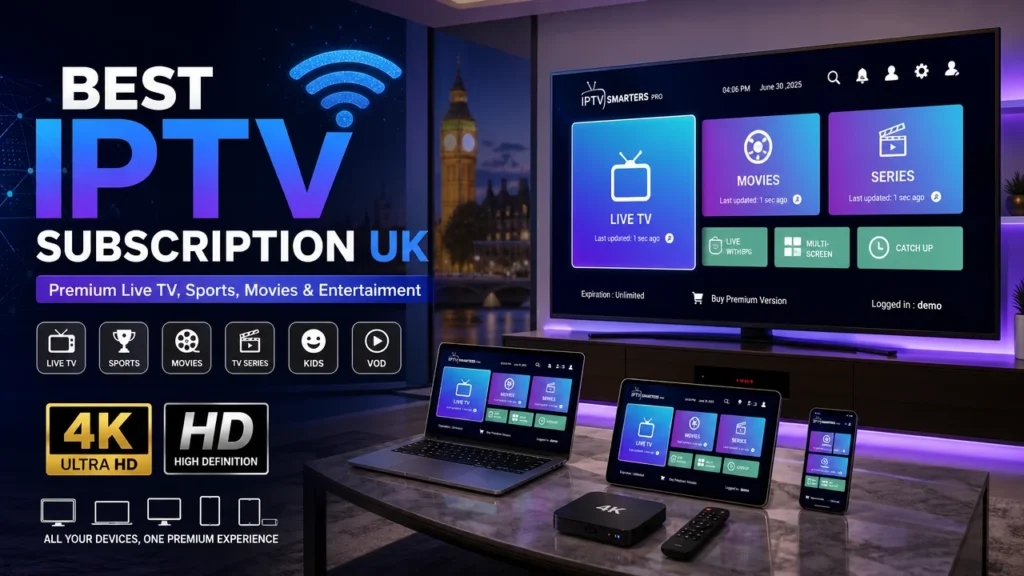
Core Types of IPTV Delivery
Understanding the delivery method helps you match services to your specific needs. The three primary formats include Live Television which broadcasts in real-time, Time-Shifted Media that allows you to pause or rewind live programs (catch-up TV), and Video on Demand (VOD) which offers a library of movies and series you can start at any time. Most complete IPTV services bundle all three components. When evaluating platforms, pay attention to which formats are included — some budget services only offer live channels without VOD, while premium subscriptions include full catch-up functionality and extensive movie libraries. For families seeking IPTV services with local channels, the live TV component is most critical.
How IPTV Services Work Step by Step
The process may appear seamless when you flip through channels, but a complex delivery chain operates behind the scenes. Understanding these steps helps you diagnose issues and choose IPTV services no buffering complaints based on actual infrastructure quality.
- Content Acquisition and Encoding. The provider captures live broadcast signals (satellite feeds, terrestrial broadcasts) or stores pre-recorded media. These raw signals are encoded into digital formats using compression standards like H.264 or H.265 to reduce bandwidth requirements while maintaining visual fidelity.
- Transmission to Private Servers. Encoded streams are uploaded to dedicated streaming servers. High-quality IPTV services use multiple geographically distributed servers to reduce latency and ensure redundancy if one server fails. This infrastructure directly influences whether you experience buffering during peak hours.
- Authentication and Middleware. When you log into an IPTV app or portal, the middleware verifies your subscription credentials, loads your personalized channel list, and displays the electronic program guide. Middleware quality varies dramatically between providers and affects user experience.
- Adaptive Bitrate Streaming. As you watch, the service continuously monitors your internet connection speed. If bandwidth drops, the stream automatically reduces video quality to prevent buffering. Premium IPTV services support adaptive streaming at multiple resolution tiers from 480p up to 4K.
- Delivery to Your Device. The decoded video appears on your screen through an IPTV player app running on a smart TV, Android box, Firestick, Apple TV, phone, or PC. The device performance and network stability at your home are the final links in the chain.
Unlock complete high-definition information and priority access packs for a seamless streaming experience.
Claim This Special Offer for IPTV Services →Concrete Benefits for Users
Why are millions of households switching from cable to IPTV services? The advantages go beyond simple cost savings. Legitimate providers offer features that traditional TV simply cannot match. First, content variety expands dramatically — a single subscription can include thousands of channels from dozens of countries including specialized sports packages, regional news, and niche entertainment. Second, device flexibility means you can watch on your television, laptop, tablet, or phone, switching between screens without additional hardware. Third, cost efficiency is significant: premium affordable IPTV services for families typically cost between $10 and $30 per month compared to $80 to $200 for equivalent cable packages. Fourth, advanced features like cloud DVR, catch-up TV (watching programs up to seven days after broadcast), and multi-screen subscriptions allow multiple family members to watch different channels simultaneously on separate devices.
Honest Limitations You Must Consider
No technology is perfect, and IPTV services come with real drawbacks. The most critical limitation is internet dependency. If your connection drops below 10 Mbps for HD streams or 25 Mbps for 4K, you will experience buffering, pixelation, or complete service interruption. Rural users or those with DSL connections often struggle. Second, service legality varies wildly. Some providers operate without proper content licensing — using these services can expose you to legal risk or sudden shutdowns where you lose your subscription investment. Third, customer support quality is inconsistent; many budget providers lack phone support and rely solely on email or ticket systems with slow response times. Fourth, device compatibility is not universal. While most services support Android and Fire TV, support for Apple TV, Samsung Smart TV, or LG WebOS may be limited or require workarounds. Finally, channel reliability can fluctuate; even the best IPTV services for sports occasionally experience stream drops during high-traffic events like championship games.
Comparison: IPTV vs. Traditional TV vs. Streaming Services
| Feature | IPTV Services | Traditional Cable TV | Streaming Platforms (Netflix, Hulu) |
|---|---|---|---|
| Monthly Cost | $10–$30 | $80–$200 | $7–$20 (per service) |
| Live Channels | 1,000–20,000+ | 100–500 | Very limited or none |
| International Content | Excellent (50+ countries) | Limited to regional packages | Moderate (region-locked) |
| Sports Coverage | Excellent (all major leagues) | Good (but expensive add-ons) | Minimal (separate subscriptions) |
| Contract Required | No (monthly plans) | Often 12–24 months | No |
| Device Freedom | Any internet-connected device | Specific cable box only | Most devices (limited live TV) |
| Offline Downloads | Rarely supported | Not available | Widely supported |
This comparison highlights why many households now use IPTV services as their primary television source while keeping one or two streaming platforms for exclusive original content. The trade-off is clear: IPTV excels at live and international programming, while streaming services dominate original series and offline viewing.
Who Is It For? Real User Profiles
IPTV services suit specific types of viewers better than others. Understanding which profile you fit helps determine if a subscription makes sense for your household. The following groups typically benefit most from these platforms.
Sports enthusiasts: Fans who follow multiple leagues across different countries find exceptional value. A single subscription gives access to Premier League, NFL, NBA, UFC, Champions League, cricket, tennis Grand Slams, and motorsports without paying for separate sports packages. The best IPTV services for sports offer dedicated sports sections with multiple feeds for major events.
International families: Households with members from different countries or expatriates seeking programming from their home region benefit enormously. IPTV services for international channels deliver content from South Asia, the Middle East, Latin America, Europe, and Africa in a single interface. Language-specific packages ensure everyone finds programming they enjoy.
Cord-cutters on a budget: If you have already canceled cable but miss live news and sports, affordable IPTV services for families fill the gap at a fraction of the cost. These users typically combine IPTV with an antenna for local over-the-air channels and one streaming service for movies.
Tech-savvy viewers: Users comfortable setting up Android boxes or configuring network settings will extract maximum value. Power users can install IPTV player apps, configure VPNs for privacy, and optimize their home network for buffer-free streaming. Those seeking where to buy IPTV services with advanced features like multi-room or catch-up will find these options more readily available.
How to Get Started: Practical Step-by-Step Guide
Transitioning to IPTV services does not require technical expertise, but following a structured approach prevents common mistakes. Use these steps to set up your system correctly from day one.
- Assess your internet connection. Run a speed test at least three times during different hours (peak evening and off-peak morning). You need minimum 15 Mbps for stable HD streaming and 30 Mbps for 4K. Also check latency (ping) — anything above 80ms may cause delays in channel switching. For households seeking IPTV services no buffering, wired Ethernet connections outperform Wi-Fi significantly.
- Choose compatible hardware. While you can start with a smartphone or laptop, dedicated devices provide better experiences. The Amazon Fire TV Stick 4K, NVIDIA Shield TV Pro, or a simple Android TV box like the Formuler Z series are popular choices. Smart TVs with built-in IPTV apps (Samsung Tizen, LG WebOS) also work but may have app limitations.
- Research reputable providers. Read IPTV services review 2026 content from multiple independent sources. Look for reviews that specifically test channel stability, customer support response times, and refund policies. Avoid providers that only accept cryptocurrency or demand annual payments upfront — these are red flags for unreliable service.
- Subscribe on a short-term plan first. Start with a monthly subscription or a free trial if offered. This minimizes financial risk while you test channel availability, stream quality during peak hours, and interface usability. During the trial period, watch at different times of day and on multiple devices to stress-test the system.
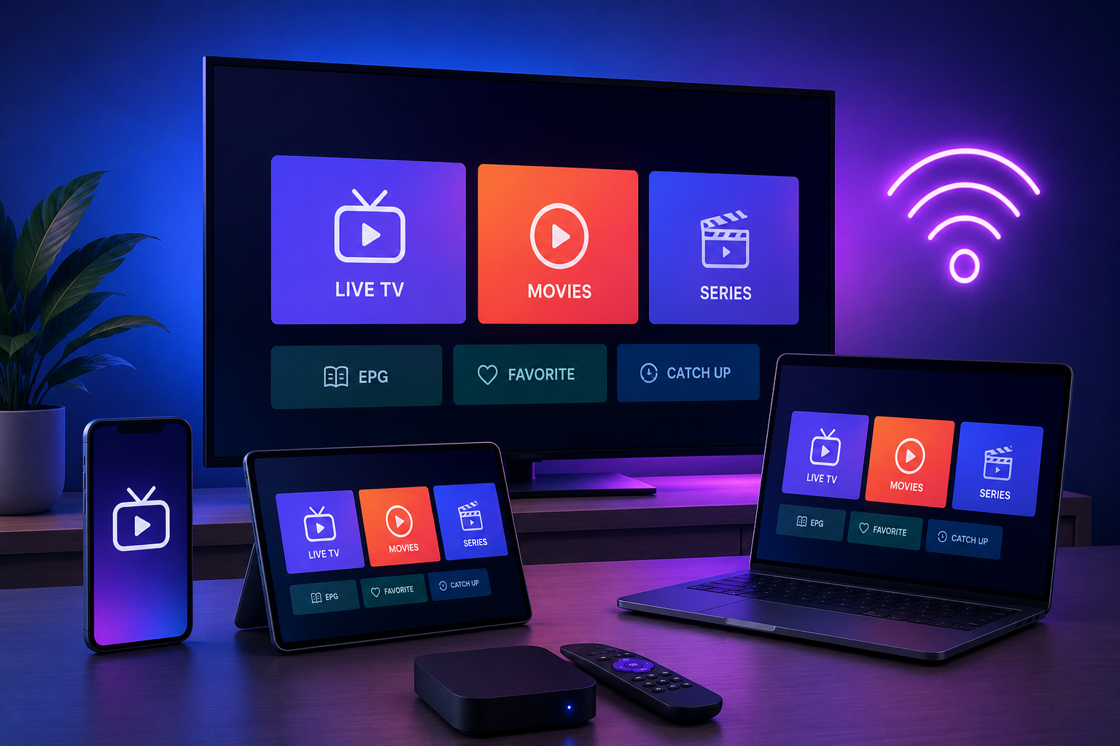
- Configure your player app. Install an IPTV player like TiviMate, IPTV Smarters Pro, or XCIPTV. Enter the playlist URL, EPG URL, and login credentials provided by your service. Customize channel groups (sports, news, entertainment) to your preferences. Set video output to match your TV's native resolution.
- Set up a VPN (recommended). While not mandatory, a VPN protects your privacy and can reduce ISP throttling that often causes buffering. Choose a VPN with dedicated servers optimized for streaming, and connect to a server in a region where your IPTV provider is based for optimal performance.
- Test thoroughly and optimize. Check channel loading times, EPG accuracy, and catch-up feature functionality. If you experience issues, try changing DNS settings to 1.1.1.1 (Cloudflare) or 8.8.8.8 (Google) — this simple change resolves many buffering problems with IPTV services.
LIMITED TIME AVAILABILITY
Unlock Full IPTV Services Access
Secure special promotional rates instantly before the window closes. Lock in your pricing model today before plans return to standard regional metrics.
Frequently Asked Questions
1. What is the difference between IPTV services and standard streaming apps?
IPTV services specialize in delivering live television broadcasts over managed networks, offering thousands of real-time channels, sports events, and international programming. Standard streaming apps like Netflix or Disney+ focus on on-demand content libraries with limited live capabilities. IPTV also typically includes features like catch-up TV and electronic program guides that mirror the traditional cable experience but delivered over the internet with greater flexibility and lower cost.
2. Are IPTV services legal in 2026?
Legality depends entirely on the provider's licensing agreements. Legitimate IPTV services operate with proper content distribution rights from broadcasters and pay the required royalties. Unlicensed services that stream copyrighted content without permission operate in a legal gray area or outright violate copyright law in most jurisdictions. Users should verify that any service they consider clearly states their licensing credentials and operates from jurisdictions with clear broadcast regulations. Services that advertise access to premium sports and movie channels at unrealistically low prices are typically unlicensed.
3. How do I find reliable IPTV services that don't buffer?
Finding reliable IPTV services requires evaluating three factors: provider infrastructure, your internet connection, and your home network setup. Look for providers that use dedicated streaming servers with content delivery networks (CDNs) rather than shared hosting. Read 2026 reviews that specifically test performance during peak evening hours. Ensure your internet plan meets minimum requirements (15 Mbps for HD, 30 Mbps for 4K). Use a wired Ethernet connection instead of Wi-Fi whenever possible, and consider a VPN to prevent ISP throttling which is a common cause of buffering.
4. What are the best IPTV services for sports fans?
The best IPTV services for sports prioritize dedicated sports channel groups, multiple feeds for major events, and reliable 60fps streaming for fast-action content like football and basketball. Top providers typically offer access to ESPN networks, beIN Sports, Sky Sports, BT Sport, Fox Sports, and regional sports networks. Look for services that clearly advertise their sports channel lineup before purchase. Premium sports IPTV services also include multi-view features that let you watch multiple games simultaneously on supported devices, which is invaluable during playoff seasons.
5. Can I get local channels through IPTV services?
Many IPTV services offer local channels including ABC, CBS, NBC, Fox, and PBS depending on your region. However, local channel availability varies significantly between providers and geographic locations. Some services aggregate local feeds from multiple cities, allowing you to watch news affiliates from areas outside your immediate region. If specific local channels are